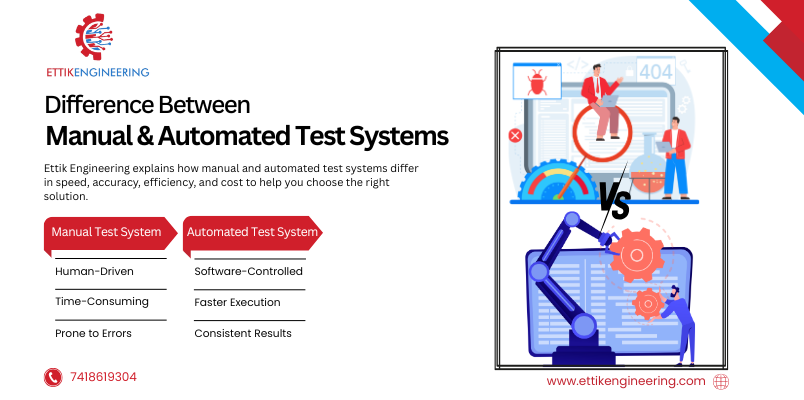
Why Test Systems Matter
Every company that makes machines, electronics or products needs to test them. Testing makes sure everything works well and is safe to use. A good test system helps find mistakes early. In today’s fast world, factories want testing that is fast, correct, and easy to use.
If you’re in Pune and looking for a smart way to improve your product quality, a strong test system in Pune from Ettikengineering can help you a lot. With expert solutions and modern tools, Ettik ensures your testing process is efficient and reliable. But first, let’s understand the two types of test systems: manual and automated.
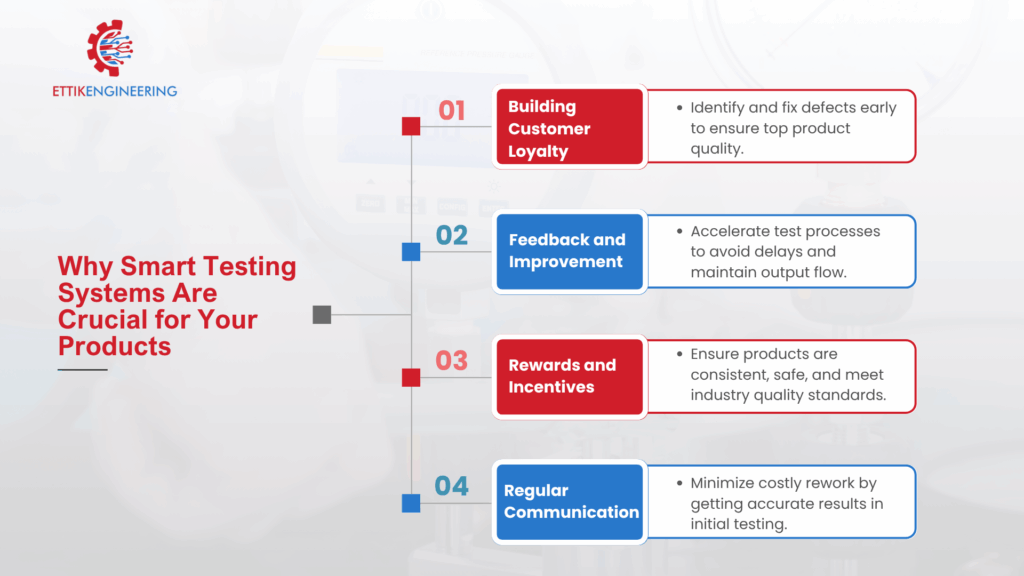
What Is a Manual Test System?
A manual test system means the work is done mostly by people. Workers use tools like multimeters or simple gauges. They write down results by hand or check if things work by watching and touching. This kind of system is often used in small workshops or when only a few items are tested.
Pros of Manual Testing
- Simple to set up
- Less costly in the beginning
- Good for low volume work
Cons of Manual Testing
- Slow and takes more time
- Easy to make mistakes
- Hard to scale for big factories
If you’re using a manual test system in Pune, it might work fine for small jobs, but not for growing businesses that want speed and accuracy.
What Is an Automated Test System?
An automated test system in Pune uses machines and software to do the testing. It checks every part, saves results, and repeats the same test over and over without any mistake. These systems are common in big factories, like those making cars or electronics.
Automated testing tools in Pune include sensors, computer programs, touchscreens, and report generators. Everything is done with speed and precision.
Pros of Automated Testing
- Fast and saves time
- Very accurate
- Works non-stop without breaks
- Easy to scale for big production
Cons
- Costs more at the start
- Needs expert setup
Many industries now use automated test equipment in Pune to improve their quality and meet customer demands.
Manual vs. Automated Test System
Here’s a quick look at how manual and automated test systems are different:
| Feature | Manual Test System | Automated Test System |
| Human Involvement | High | Low |
| Speed | Slow | Fast |
| Accuracy | Depends on person | High and repeatable |
| Data Recording | Manual | Automatic and digital |
| Setup Cost | Low | Higher initially |
| Best Use Case | Small batches, R&D | Mass production, strict testing |
If you’re still using a manual test system in Pune, this table helps you think about when it might be time to upgrade.
Which Testing Method Should You Choose?
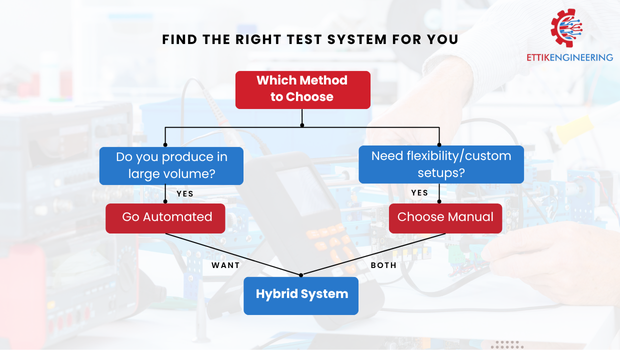
1. For Small Businesses & Custom Work → Manual Testing
- Perfect if you make limited quantities.
- Affordable automated test equipment is now available in Pune.
2. For Large Factories & Fast Production → Automated Testing
- Ideal for Pune’s auto/electronics manufacturers.
- Cuts testing time from days to hours.
3. Best of Both Worlds → Hybrid Testing
- Use automated test systems in Pune for routine checks.
- Keep manual testing for final quality control.
“Smart companies don’t choose—they combine both methods for unbeatable quality.”
Need a custom testing plan? We design hybrid solutions for Pune industries!
Using automated testing tools in Pune helps many businesses become more reliable and faster.
Industries That Use Automated Test Systems
Many factories are now moving to automated test systems in Pune because they make work better. Here are some industries using them:
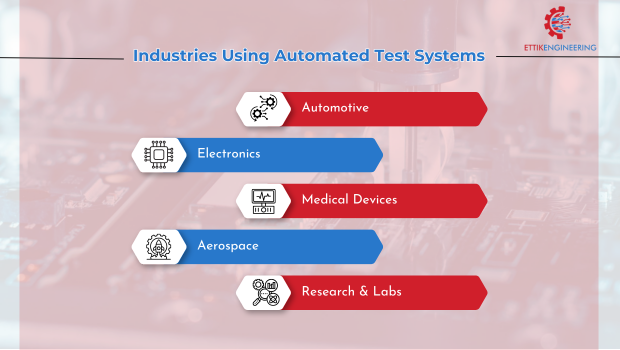
- Automobile Companies: Test engine parts, wiring, safety systems.
- Electronics: Check every board, chip, or sensor.
- Medical Devices: Make sure machines work perfectly.
- Aerospace: Test aircraft parts for high safety.
If your factory is in any of these areas, using automated test equipment in Pune will help you meet high standards.
Why Ettik Engineering Is the Right Partner
At Ettik Engineering, we help companies build both manual and automated test systems in Pune. With 10+ years of experience, we design custom solutions that fit your product and budget.
Why choose us?
- Modern design and software
- Reliable automated test equipment in Pune
- Skilled engineers and support team
- Fast service and expert advice
We don’t just sell tools. We help you grow.
Make the Right Choice
Both manual and automated systems are useful. It depends on what your factory needs. If you’re growing, want faster work, or need high-quality checks, it’s time to upgrade to an automated test system in Pune.
Ettikengineering can help you plan, build, and install the best test system for your products. We make sure you stay ahead in the market.
Ready to upgrade your testing? Contact Ettikengineering today. 2025 slots now open.
Key Takeaways
- Manual testing = Humans checking products (good for custom work).
- Automated test equipment in Pune = Machines testing fast (great for big factories).
- Hybrid systems combine the strengths of both methods.
- Ettik Engineering provides top automated testing tools in Pune + manual inspections.